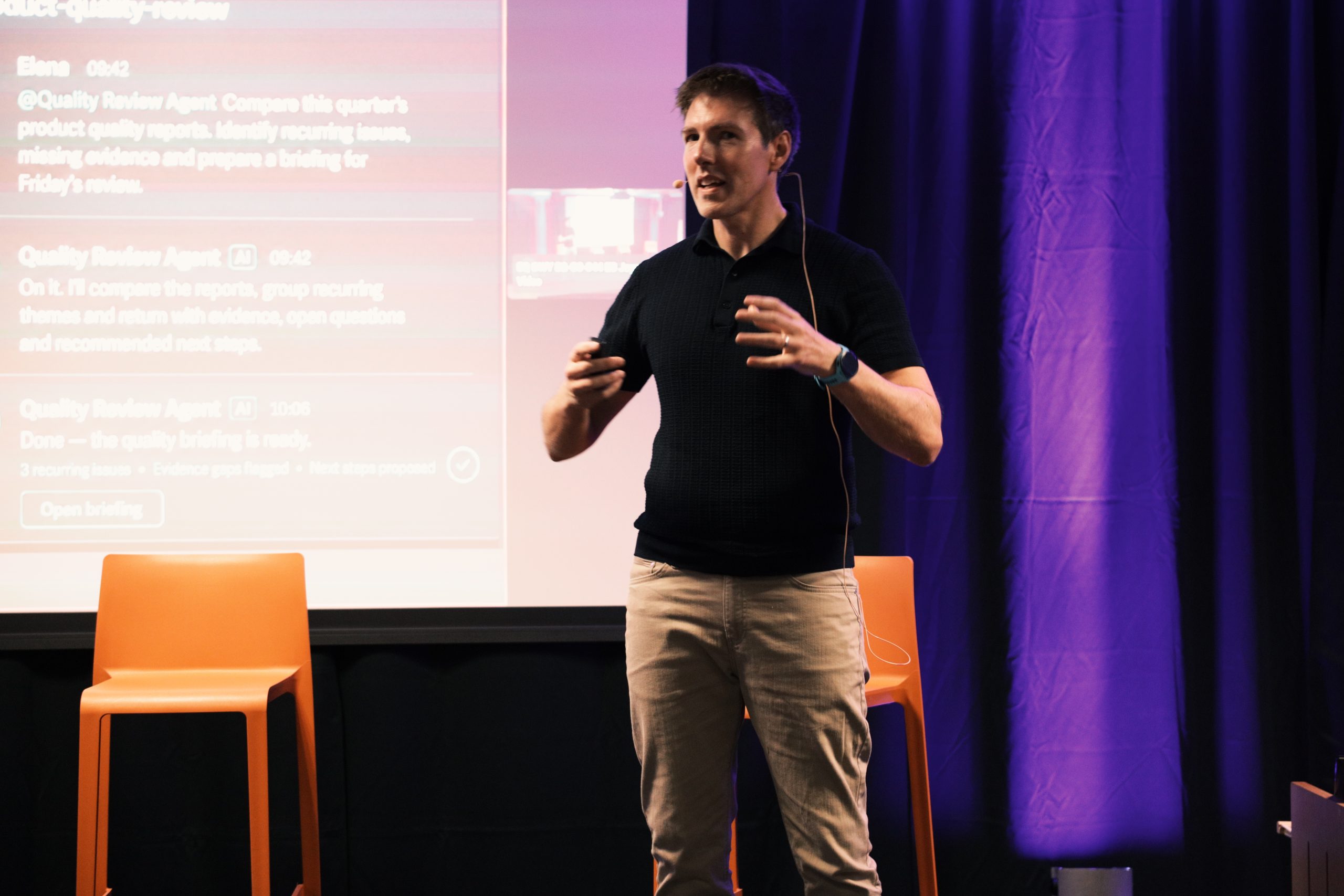
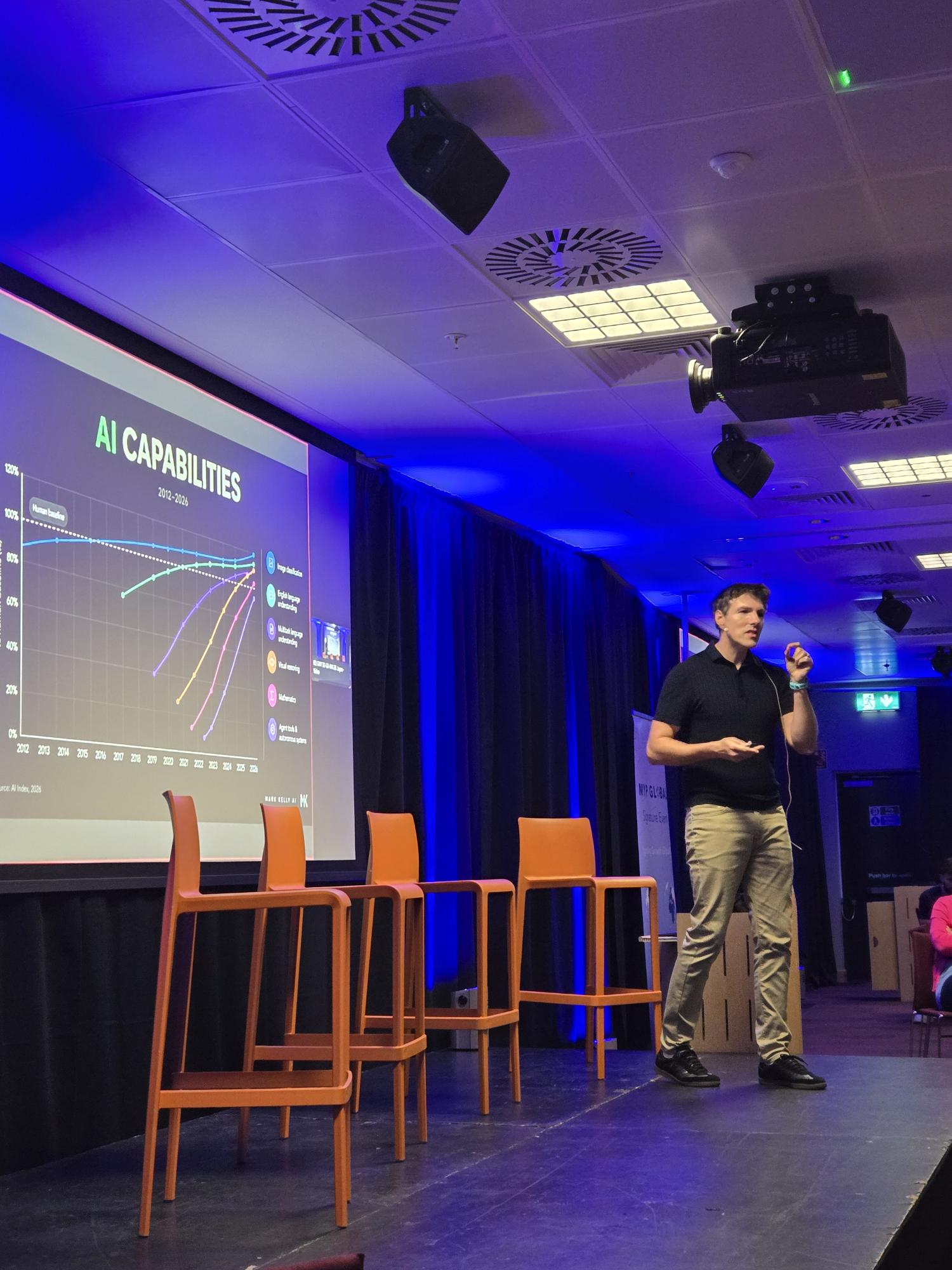
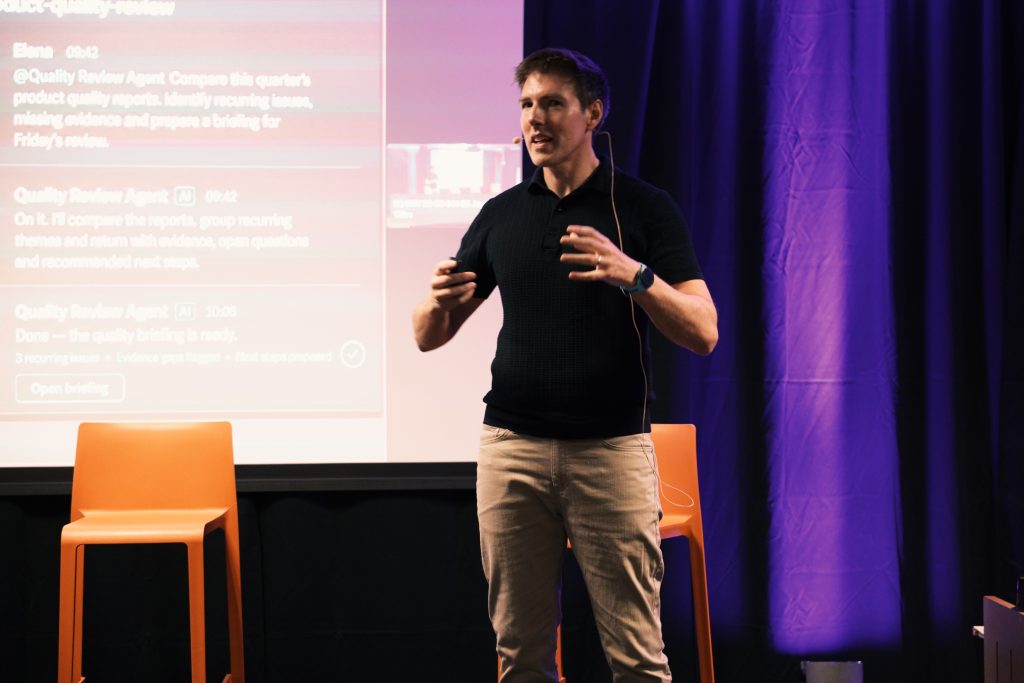
Practical AI skills start with one habit: tell the tool who you are before you ask it anything. That was the core of my keynote for a Medtronic team this September. It is also the habit most people skip.
The room was full of engineers, project managers and technical professionals. Smart, busy people who work in one of the most regulated industries there is. They did not want hype. They wanted to know how AI could help them do better work on Monday, without cutting corners.
The best question asked me on the day was what are some of the most practical ways to use AI while maintaining good governance.
Why practical AI skills beat clever prompts
Most people use AI like a search box. Type a question, get an answer, move on. The answer is usually fine and rarely useful.
I showed the difference live. First, a cold prompt: “What should I focus on this week?” The answer was true for anyone and useful to no one.
Then the same question, after a short brief: role, priorities, deadlines, constraints. The answer changed completely. Same tool. Your context. Your week.
Three habits that work in any AI tool
Licences differ. Tools change every quarter. So I focused on habits that work everywhere, from Microsoft Copilot to ChatGPT.
- Put your context in. Write a short Context Brief once: your role, your goals, your standards and your boundaries. Reuse it every time.
- Check what the tool assumed. Ask AI to list the assumptions it made. Then correct the wrong ones. This one habit prevents most bad answers.
- Keep your own voice. AI drafts. You decide. The final version should sound like you and reflect your judgement.
AI should augment human judgement, not replace it
In a regulated industry, this is not a slogan. It is the job. Every output needs a human who understands it, checks it and owns it.
That is why I teach the boundaries first. Know what never goes into an AI tool. Know which company tools are approved. Know when a human must review the result. Then experiment freely inside those lines.
The three skills that matter more than any tool
- Curiosity. Wonder how things work, and ask the second question every time.
- Agency. Find the paths that exist within your constraints, instead of waiting for permission to try.
- Systems thinking. Soon you will work alongside AI agents. You will need to design how work flows between people and machines.
Tools change. These skills compound. Careers follow.
What the team said
“Your keynote resonated strongly with our attendees because it connected the future of AI to the real challenges and opportunities they face every day. Participants especially appreciated the practical examples of how AI can be used beyond simple prompts, from enhancing learning and decision-making to helping individuals think differently, work more effectively, and continue growing in their careers.”
Ellie Stoskopf, IT Project Lead, Medtronic
The counter-argument, before you make it
“Our people are engineers. They will work AI out for themselves.”
Some will. Most will use it like a search box and decide it is overrated. The gap between those two groups is not intelligence. It is a few simple habits, taught once and practised often.
What to do on Monday
Step 1: Write your Context Brief
Ten minutes. Your role, your top three priorities, your standards and what must never go into AI. Save it somewhere you can paste it.
Step 2: Ask one real work question, twice
Once cold, once with your brief. Compare the answers. You will not go back.
Step 3: Ask “What did you assume?”
Make it the last line of every important prompt. Correct the assumptions, then use the answer.
FAQs
Do practical AI skills depend on which tool we use?
No. The habits in this post work in Microsoft Copilot, ChatGPT and most other assistants. That is why they are worth teaching first.
Is AI safe to use in a regulated industry?
It can be, with clear boundaries. Use approved tools, keep sensitive data out, and make sure a human reviews and owns every output.
How long does it take a team to build these habits?
One session starts it. A few weeks of daily practice makes it stick. The Context Brief speeds this up because people reuse it every day.
The bottom line
AI will not reward the team with the best licence. It will reward the team with the best habits. Put your context in, check the assumptions, and keep your own voice.
Thank you to Ellie and the team at Medtronic for having me. If you lead a technical or regulated team and want a practical session like this, check my availability, read the full case study or explore my AI keynotes.
Mark Kelly is an AI keynote speaker, strategist and board advisor based in Ireland. He founded AI Ireland, hosts the AI Ireland Podcast, wrote the AI Unleashed series and created the AI Awards. He has delivered 300+ keynotes and trained more than 10,000 professionals.
Share This Story, Choose Your Platform!
Planning an event or leadership offsite?
Mark Kelly delivers evidence-based AI keynotes and hands-on AI leadership workshops for boards, executive teams and conferences across Ireland and Europe.