
My AI Keynote for Arrow: From Selling Licences to Delivering Business Outcomes
On Wednesday, Arrow invited me as an AI keynote speaker to present to 500 people from its partner community about the business of Artificial Intelligence.
The conference theme was Momentum. My focus was on what that means for the next five years: the practical AI business outcomes partners can create, the results customers will actually pay for, and the skills leaders need to develop right now.
My central message was simple:
Selling and renewing licences is no longer enough. The bigger opportunity is helping customers achieve something they could not achieve before.
That means looking beyond which AI tool to sell and asking a more valuable question: what will change for the customer?
What 275 AI Awards Applications Tell Us About Opportunity
For this keynote, I drew on insights from the 275 applications submitted to this year’s AI Awards Ireland.
Through my work with AI Ireland, the AI Awards, and the AI Leaders Survey, I get to explore how organisations are applying AI to real business problems. That gives me a different starting point for a keynote: not just what technology companies promise, but what real organisations are trying, building, and learning.
For Arrow’s partners, I framed that commercial opportunity in two ways: Blue Euro and Green Euro.
-
Blue Euro is about improving the business you already have.
-
Green Euro is about creating new ways for that business to grow.
Both matter. The leadership challenge is connecting them.
Blue Euro: Make the Work Better
Blue Euro is the efficiency and productivity opportunity. It means reducing repetitive administration, helping people find information, improving consistency, and giving teams more time for valuable work.
Take Laya Healthcare’s Knowledge Hub. It helps customer service advisers find policy-specific answers using approved information and relevant member context. Supporting references and confidence indicators help advisers apply their judgement during customer conversations.
Or consider Uisce Éireann, where AI supports leak detection, infrastructure inspection, and operational work. Its programme combines technology adoption with workforce learning and governance. The approach is about more than introducing another tool; it connects the technology to how people work and how services are delivered.
For a technology partner, these examples suggest a better customer conversation. Rather than starting with, “How many licences do you need?”, start with, “Where is your team losing time, and what would better look like?”
But I also challenged the room to look beyond the initial saving: When AI gives you time back, what will you do with it?
Serve more customers? Improve the experience? Develop a new service? Give your best people more time to solve difficult problems? That is where Blue Euro can become Green Euro.
Green Euro: Create Something Customers Will Pay For
Green Euro is the growth opportunity: new products, new services, new customers, and new sources of revenue.
For Arrow’s partners, one practical opportunity is moving beyond a standalone Copilot licence towards an offer that brings together the technology, security support, and help applying it to a customer’s actual work.
The commercial question becomes: Can you package a solution to a customer’s problem, rather than simply supply the individual parts?
The AI Awards offer useful examples of that thinking:
-
BH Consulting’s BH Haven brings cybersecurity, data protection, and AI governance together in one service, combining AI-supported automation with expert oversight. It illustrates how specialist expertise can be packaged around a connected set of customer needs.
-
Herdwatch’s Herd Intelligence lets farmers ask questions about their livestock records and receive relevant answers in minutes. It combines farm information, agricultural knowledge, and AI to make existing data easier to use.
For me, the lesson is not that every AI feature automatically creates revenue. It is that your existing knowledge, customer relationships, and data may give you the foundations for a more valuable offer.
Start with what your customer needs. Then work backwards to the technology. Do not just sell AI. Sell the result.
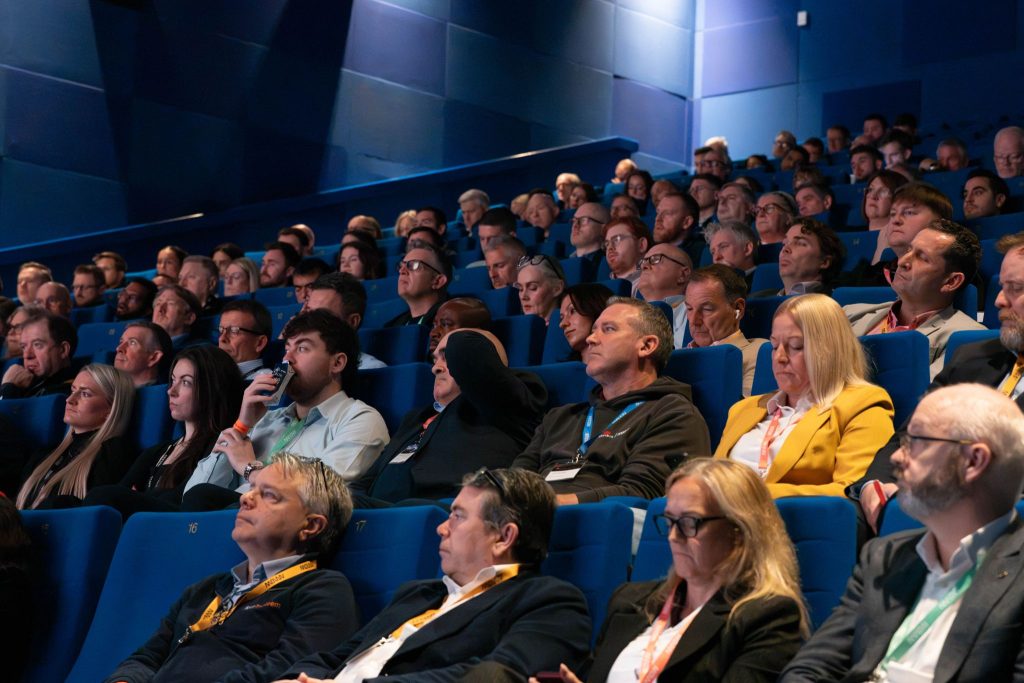
Attendees gathered in the auditorium to hear Mark Kelly speak about AI at the Arrow Conference.
AI’s Overlooked Superpower: Helping Us Learn
The keynote was not only about commercial opportunity. It was also about personal capability. I spoke about using AI as a tutor, not just an assistant.
There is a difference between asking AI to complete something and asking it to help you understand how to do it. My challenge to the audience was:
“AI, don’t do it for me. Teach me first.”
That is also the distinction learning features—such as ChatGPT’s study mode—are designed to support: guiding people through a problem with questions and explanations, rather than simply presenting the answer.
For a business leader, the subject might be understanding a customer’s industry, assessing a business case, or preparing for a difficult conversation. A practical way to begin is by using this prompt:
“Act as my tutor. I want to learn how to assess an AI business case. Ask what I already understand. Explain the key ideas using a simple business example, then give me a scenario to work through. Challenge my answer before showing me how to improve it.”
The goal is not to become dependent on an answer you cannot assess. It is to become better equipped to ask the next question.
Build a Growth Mindset, Not Just a Collection of Tools
Microsoft reported in November 2025 that more than 1.2 billion people had used AI tools in less than three years. But access to AI and the ability to use it well are different things.
My message to the room was that we should approach AI with curiosity, while keeping responsibility for our own thinking.
Ask it to explain something differently. Practise an unfamiliar task. Give it an example of what good work looks like. Challenge its suggestions. Check important claims. Apply what you learn. As we delegate more work to AI, we should be deliberate about the capabilities we continue to develop ourselves.
For me, that is the growth mindset this moment demands: being willing to become a beginner again, without giving up the experience and judgement you already bring.
Use AI to strengthen your judgement, not replace it.
Momentum is What Happens After the Conference
Looking five years ahead is valuable. Deciding what to do next is essential.
For Arrow’s partners, the opportunity is to connect three things: a customer problem worth solving, an outcome worth paying for, and the capability to deliver it responsibly. That might begin with one repetitive process. It might lead to a new service. It might start with a leader using AI to understand an unfamiliar opportunity.
The important thing is to move from interest to purposeful action. Thank you to the Arrow team for inviting me to bring this conversation to its partner community.
The question I would leave with any leadership team is the same:
Where could AI help you improve today’s business, and what could it help you build next?
Bring This Conversation to Your Next Event
My AI keynotes connect real business examples with practical steps for leaders and their teams. For partner conferences, leadership offsites, and company events, I tailor the session to the audience, the commercial challenges they face, and the decisions they need to make.
The aim is to help people see the opportunity, understand the risks, and identify where to begin.
To discuss an AI keynote for your next event, get in touch with your event date, audience, and the outcomes you want the session to support.
Share This Story, Choose Your Platform!
Planning an event or leadership offsite?
Mark Kelly delivers evidence-based AI keynotes and hands-on AI leadership workshops for boards, executive teams and conferences across Ireland and Europe.