Luke Donald’s Leadership Lessons for the AI Era
By Mark Kelly
What does Ryder Cup leadership have to do with preparing a business for AI? After listening to Luke Donald at Arrow’s partner conference, my answer is: more than you might expect.
Arrow had invited me to deliver an AI keynote to an audience of 500 from its partner community. The conference theme was Momentum, and my session explored the business opportunities AI creates and the mindset needed to act on them.
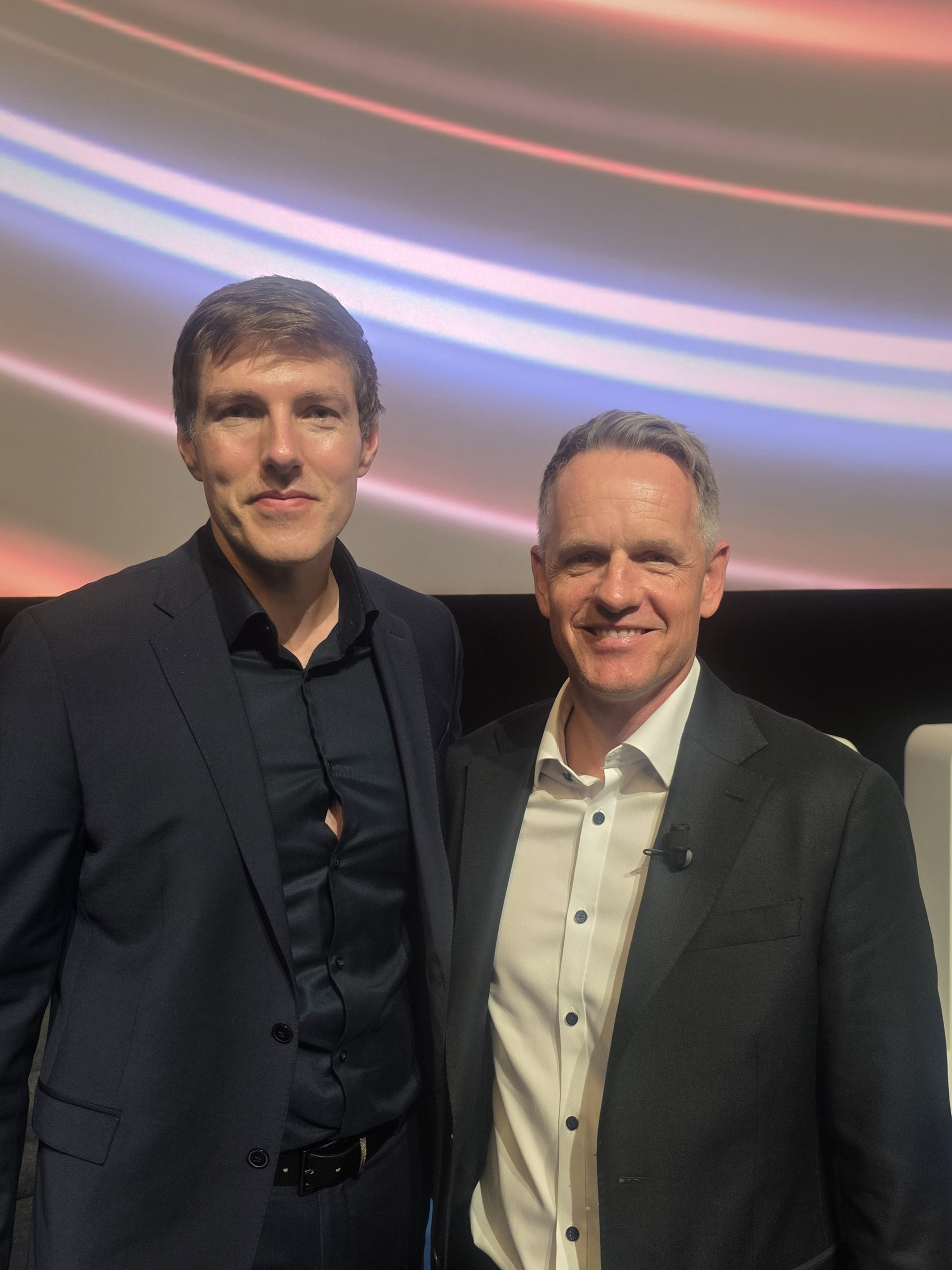
Later, I listened to Luke Donald, Europe’s Ryder Cup captain, in a fireside chat with Russell Morris, before meeting him afterwards. Ryder Cup
His stories about teamwork, preparation and learning connected with something I had spoken about earlier that day: we should use AI to develop our capabilities, not simply to complete our tasks.
Leadership starts with a shared purpose
Luke spoke about taking over without having been the first-choice captain. He described finding a theme the team could rally around and asking some of the world’s best players to leave their egos at the door.
What I took from that was the importance of a shared purpose. Bringing talented people together is one thing. Helping them work towards the same outcome is another.
That is a useful question for any leadership team introducing AI: what are we trying to achieve together?
Is it giving people time back, improving customer service or creating a new source of revenue?
“Use more AI” is an instruction about technology. It is not a shared business goal.
Small details show people that you care
The details of Luke’s preparation stayed with me. He talked about changing pillows and blacking out bedrooms so players could sleep better.
He also spoke about spending 250 days learning Italian on Duolingo so he could deliver his speech in Italian.
To me, these were examples of care expressed through action. He was paying attention to the experience of the people around him, not just the result he wanted from them.
The business equivalent might be giving someone protected time to practise with AI, explaining which information they can safely use, or making it comfortable to ask a basic question.
Before asking people to perform differently, ask what would help them succeed.
What I asked Luke Donald about data and AI
I had the opportunity to ask Luke about using data and AI to assess players and match their strengths to particular holes.
It was fascinating to explore how information could support decisions at that level. My takeaway for business was about the relationship between evidence and judgement.
The role I want AI to play is to help us examine evidence, compare options and challenge assumptions. The responsibility for the decision still belongs to us.
An answer is a starting point. Ask what supports it, what might be missing and what would change the conclusion.
Talent is a starting point. Mindset takes it further.
Russell’s final question was what advice Luke would give the technology leaders in the room as they build teams to make the most of AI.
One line stayed with me:
“Talent only gets you so far.”
That echoed my own keynote. Experience matters, but so does the willingness to keep learning, explore unfamiliar subjects and ask better questions.
For me, a growth mindset means being prepared to say, “I do not understand this yet,” and then doing something about it.
A leader can have decades of experience and still be a beginner with a new tool. That is not a weakness. The important thing is being willing to learn without pretending to have every answer.
Use AI as a tutor, not just an assistant
Earlier in the day, I had challenged the audience to try a different approach:
“AI, don’t do it for me. Teach me first.”
Rather than only asking AI to write a business case, ask it to help you understand how to assess one. For example:
Teach me how to assess an AI business case. Ask what I already know, explain the key ideas using a simple example, then give me a scenario to work through. Challenge my reasoning before showing me how to improve it.
Treat this as a practice session, not an answer service. Do the thinking, explain your reasoning and check important claims against reliable sources.
The goal is not to become dependent on an answer you cannot assess. It is to become better equipped to recognise a useful answer and challenge a weak one.
Your judgement is your superpower. Use AI to strengthen it.
Momentum starts with the people
Arrow’s conference theme brought the two conversations together for me. My keynote explored the opportunities AI creates. Luke’s fireside chat prompted a reflection on how leaders prepare people to take those opportunities.
My takeaway was to be clear about the goal, pay attention to the details and make learning part of the work.
Thank you to the Arrow team for inviting me to speak, and for a conversation about leadership that will stay with me.
Bring practical AI leadership to your next event
I deliver AI keynotes and leadership workshops for conferences, partner events and leadership teams, connecting real business examples with practical ways to build skills, improve decisions and turn AI into useful results.
Planning an event? Share your audience, event date and what you want people to take away.
Check Mark’s availability
Share This Story, Choose Your Platform!
Planning an event or leadership offsite?
Mark Kelly delivers evidence-based AI keynotes and hands-on AI leadership workshops for boards, executive teams and conferences across Ireland and Europe.