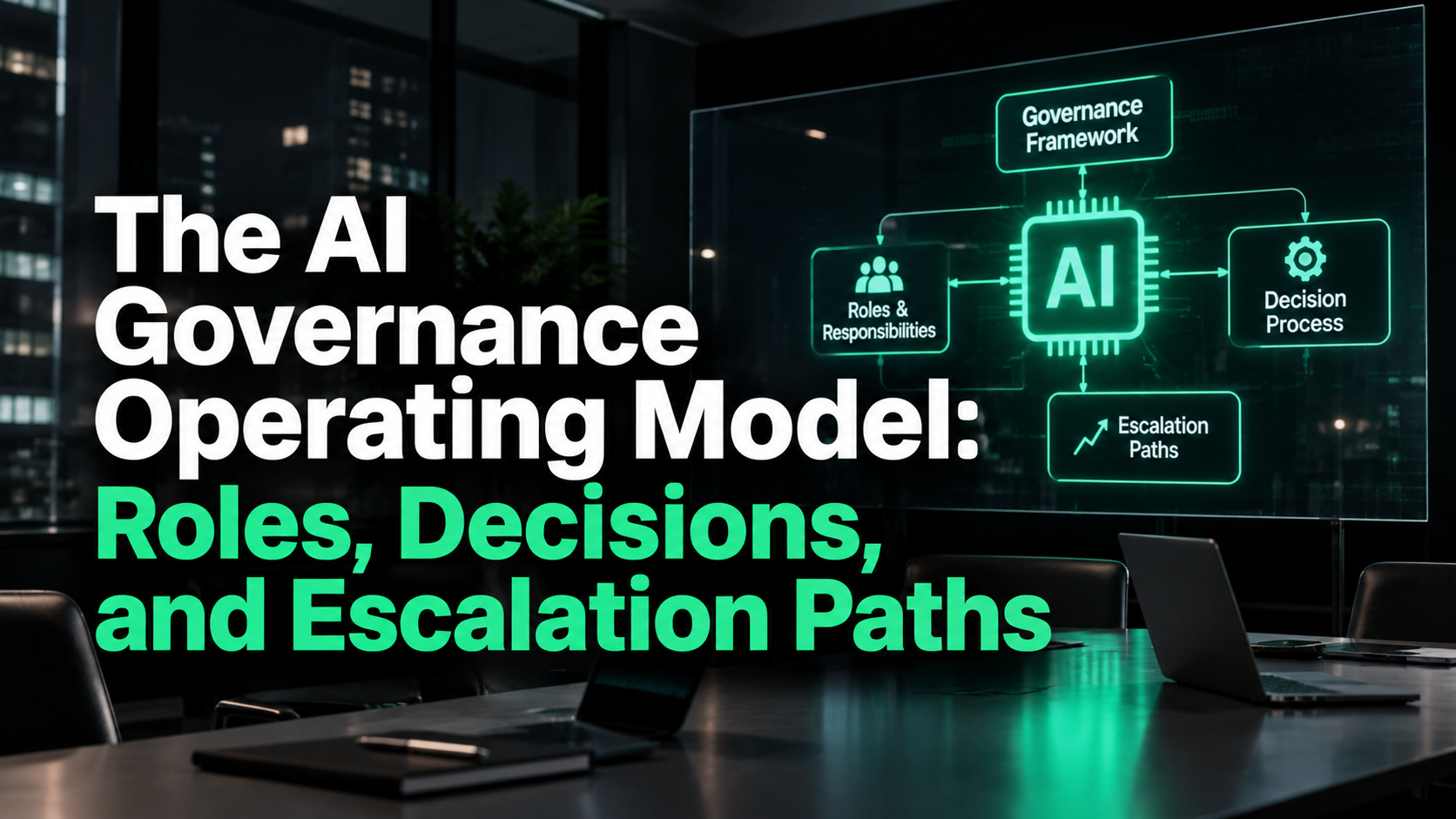
The AI Governance Operating Model: Roles, Decisions, and Escalation Paths
By Mark Kelly
A finance manager wants AI to sort supplier queries. The data team can connect the inbox. Procurement knows the supplier contracts. The risk team wants to understand where attachments go. Everyone has something to contribute. One person still needs to be able to say what the workflow can do on Monday.
An AI governance operating model is the agreement that answers that question. I’d start with five roles and a short list of decisions.
|
Role |
What they decide or own |
|
Board or delegated committee |
Sets risk appetite, oversees material exposure and challenges management on incidents, controls and value. Approves matters reserved to it. |
|
Executive sponsor |
Sets priorities, assigns business owners, allocates funding and accepts risk within delegated authority. Escalates above that authority. |
|
Product or workflow owner |
Defines intended use, approves routine changes within agreed limits, monitors performance and owns the fallback process. |
|
Risk, privacy, legal and security teams |
Set or advise on specialist requirements, challenge evidence and review exceptions. Use formal approval or stop powers where delegated. |
|
End users |
Check outputs where required, act within their existing authority and flag errors, near misses and cases outside the normal rules. |
Decide what changes trigger a fresh review
A change to the wording of an internal summary may be within the workflow owner’s authority. Giving that same assistant access to payroll records, sending messages to suppliers or allowing it to change bank details changes the nature of the work. Those changes should have a review route before launch.
In the supplier inbox example, let the finance owner approve a test that labels queries and prepares drafts using approved sources. A request to change a supplier’s bank details should follow the organisation’s established verification process. If the assistant starts routing those messages into an ordinary payment queue, staff need a clear way to pause routing and alert the owner.
Make escalation work at three speeds
-
Routine issue. Record recurring errors and have the workflow owner review them with the team.
-
Material change. Ask the executive sponsor and relevant specialists to review new actions, data or affected groups before launch.
-
Suspected harm or unauthorised action. Give the operational lead immediate pause authority, switch to the agreed fallback and notify the relevant incident owners.
Every live workflow should have a one-page record of its owner, permitted use, approval limits, pause authority and next review. If three people must attend a meeting before somebody can stop a faulty workflow, redesign that part first.
I work with leadership teams to turn AI governance policies into decisions staff can make with confidence.
Share This Story, Choose Your Platform!
Planning an event or leadership offsite?
Mark Kelly delivers evidence-based AI keynotes and hands-on AI leadership workshops for boards, executive teams and conferences across Ireland and Europe.