Enterprise AI Adoption: 4 Leadership Lessons from the AI Awards 2026 Finalists
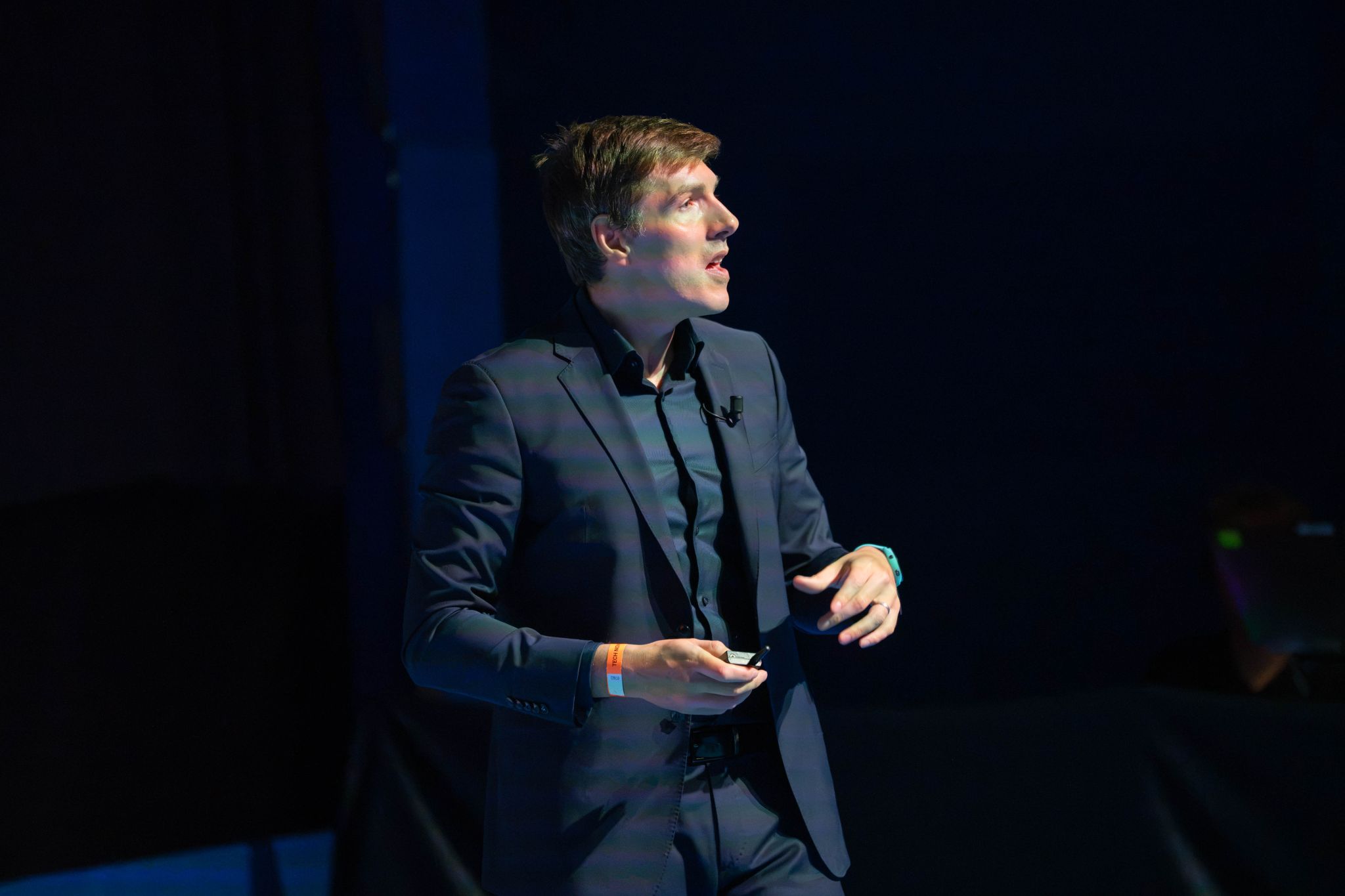
By Mark Kelly | AI Keynote Speaker & Founder of AI Ireland
If AI saves your team ten hours a week, what happens next?
Do customers get faster answers? Does an administrative backlog shrink? Or can experienced people finally spend more time on complex strategic decisions that require human judgement?
These are the fundamental questions leaders must ask when navigating enterprise AI adoption. Commercial value does not come from generating text or automating isolated tasks—it comes from deciding how the underlying work will improve.
The finalists for Best Application of AI in a Large Enterprise at the AI Awards 2026 which is supported by Principal sponsor Microsoft—Mark Anthony Brands International, Musgrave Group, Novartis, and Unum—provide four compelling models of what structured adoption looks like in production.
Drawing on my experience evaluating 1,300+ AI Awards applications and interviewing more than 1,000 AI leaders over the past decade, here are the core leadership decisions these enterprise deployments bring into focus.
4 Enterprise AI Adoption Lessons from the Field
1. Mark Anthony Brands International: Decide What Reinvested Capacity Makes Possible
Deployment Focus: Creative Production & Asset Governance
Mark Anthony Brands International integrated AI into its Content Factory to support the creation, testing, and delivery of marketing assets across its brand portfolio, maintaining strict internal governance and oversight.
The leadership lesson here is about capacity allocation.
If a marketing team can produce creative variations in minutes rather than days, leadership has choices: they can spend more time refining the brief, testing diverse messaging with real customers, or interrogating why a previous campaign underperformed.
Those strategic choices must be designed into the project from day one. Time saved only creates business value when leadership decides what that time makes possible.
The Executive Question: Ask your department heads: “What is the single highest-value initiative your team currently struggles to find time for?” Design your AI deployment to directly fund that activity with recovered hours.
2. Musgrave Group: The Critical Role of Middle Managers in Adoption
Deployment Focus: Retail Operations & Workforce Enablement
Musgrave’s AI and Automation Factory combines automation, Microsoft Copilot, bespoke internal AI products, and structured staff training—backed by rigorous governance and delivery frameworks.
This highlights the indispensable role of management enablement in digital transformation.
A single workshop can introduce a software tool. Confident, safe adoption across everyday work requires clear expectations, psychological safety to practise, and managerial support when outputs need correction.
The Executive Question: Have your front-line managers agreed on which recurring tasks are approved for AI, what data is permitted, and how teams must verify outputs? Managers must explicitly make room for learning and validation within the normal working week.
3. Novartis: Making Organisational Knowledge Usable at Decision Time
Deployment Focus: Clinical Trial Feasibility & Site Selection
Novartis developed an AI-powered Survey Intelligence Platform to interpret complex clinical trial feasibility surveys, directly assisting clinical teams in trial planning and global site selection.
The broader leadership lesson centres on proprietary data accessibility.
A large enterprise sits on decades of surveys, compliance filings, audit reports, and domain knowledge. The true competitive advantage lies in making that historical knowledge immediately accessible at the exact moment a high-stakes decision is made.
Think of a well-stocked corporate archive: its value multiplies exponentially when the decision-maker can instantly retrieve the right evidence while understanding its constraints.
The Executive Question: Identify a recurring business decision that currently stalls because staff must manually gather information from five different systems. Your internal data estate deserves just as much investment as the commercial AI models you licence.
4. Unum: Establishing Ownership Across the Entire Customer Journey
Deployment Focus: Multi-Agent Orchestration Across Legacy Systems
Unum’s Small Market Big Bet connects long-standing legacy insurance systems using multi-agent orchestration across quoting, onboarding, enrolment, and policy administration.
This addresses the challenge of cross-functional process fragmentation.
A customer experiences your company as a single journey. Internally, that journey passes through multiple disconnected departments, legacy databases, and approval gates. If AI accelerates quotation drafting by 80%, but the customer still waits four days for onboarding review, the net customer experience remains unimproved.
Instead of funding a multi-year rip-and-replace project, AI agents can bridge these legacy gaps (a dynamic I explored recently in our breakdown of agentic AI in business).
The Executive Question: Before greenlighting an AI pilot, map the entire customer workflow from initial touchpoint to final delivery. Who is the single named executive accountable for the end-to-end outcome, rather than just departmental efficiency?
Stress-Testing Your Strategy with the 5Ps Framework
To help leadership teams turn these observations into practical decisions, I developed the 5Ps AI Readiness Framework, which I shared during my opening keynote at Convergence 2026:
-
People: Who requires new operational skills, and do they have clear boundaries regarding accountability?
-
Process: Which workflow steps should be redesigned, and which legacy redundancies can be eliminated entirely?
-
Platforms: Can approved AI tools integrate securely with the core systems and legacy databases your workforce already relies on?
-
Proprietary Data: Is your enterprise data clean, permissioned, and easily accessible to models without creating compliance risks?
-
Products & Services: What tangible outcome will change for the end customer, employee, or bottom-line margin?
The Reality of Net Time Saved: A Simple Math Check
Consider a team that saves six hours a week by automating first drafts with AI, but subsequently spends four additional hours reviewing, verifying, and correcting hallucinated or misaligned outputs.
The net operational saving is two hours, against which you must still deduct software licensing, infrastructure costs, and training overhead.
Those two net hours can still deliver immense enterprise value—allowing senior staff to resolve complex customer exceptions, investigate anomalies, or clear backlogs. But the return on investment depends entirely on whether leadership channels that recovered time into high-value work.
For your next board or executive meeting, choose one AI deployment and agree on three points:
-
The operational outcome you expect to improve.
-
The single executive accountable for the result.
-
The verified business metrics you will review.
AI adoption is an opportunity to fundamentally redesign work. Executive leadership determines whether that opportunity translates into measurable yield.
Bring Practical AI Leadership to Your Next Event
I work with executive teams and enterprise boards worldwide through keynote addresses, executive briefings, and adoption workshops. My sessions cut through the technology hype to connect proven frameworks with real-world case studies from the AI Awards.
Planning a leadership conference, board retreat, or executive offsite?
👉 Book Mark Kelly for an AI Leadership Keynote to help your leadership team turn AI possibilities into clear, profitable business decisions.
Disclosure: AI Ireland organises the annual AI Awards. Company summaries in this article are based on published 2026 finalist submissions. The analytical frameworks, 5Ps methodology, and leadership observations represent the author’s independent perspective.
Share This Story, Choose Your Platform!
Planning an event or leadership offsite?
Mark Kelly delivers evidence-based AI keynotes and hands-on AI leadership workshops for boards, executive teams and conferences across Ireland and Europe.